What happens when your brain is injured?
We know from neuroscience that the brain does have some capacity to regenerate after injury in specific areas such as the hippocampus which is responsible for memory and learning. We also know that although dead neurons in the brain do not grow back once injured, the surviving neurons can adapt by growing new connections.
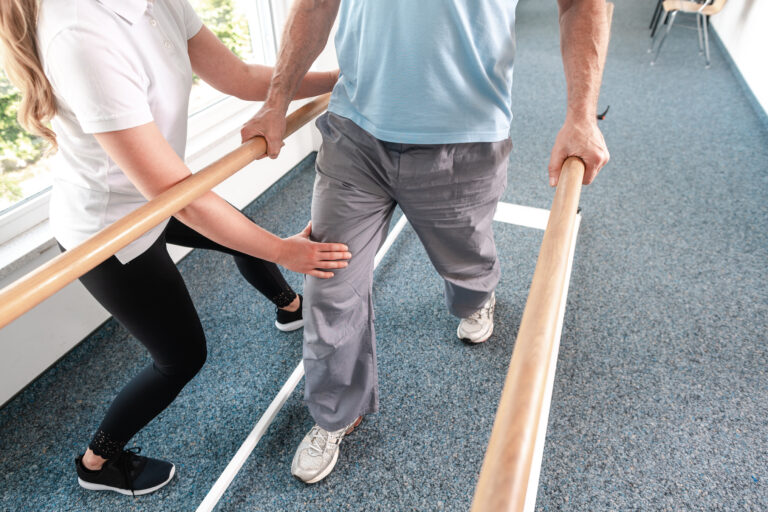
With specialist rehabilitation, some recovery from a brain injury may be possible. The brain can start to regain lost function by guiding other sections and parts of the brain to take over the skills and abilities of the damaged sections. It is therefore vital, following a brain injury, that the injured person receives early and appropriate rehabilitation to assist with the brain injury recovery process. The purpose of specialist rehabilitation is to help minimise the long-term effects of the brain injury and provide the injured person and their family with strategies to manage ongoing symptoms. Specialist rehabilitation after brain injury can include physiotherapy, occupational therapy, speech and language therapy, neuropsychology for instance.
In the first few weeks following a brain injury it is not unusual for swelling, bleeding, or other damage to affect the function of the brain.
As swelling decreases, blood flow improves which means some of the damage to the brain starts to recover which can lead to improved functioning of the brain.
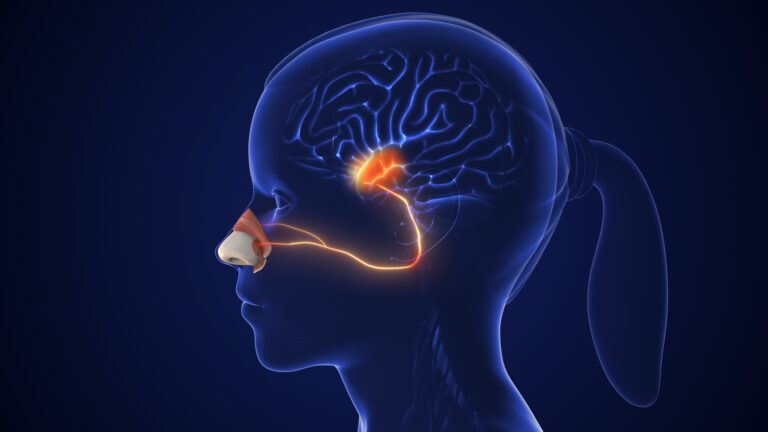
It is generally not possible in the first few months to determine the typical brain injury recovery time or the likely outcome, as these will vary depending on the individual and the nature and extent of their injury. Researchers are however continuing to explore new ways of predicting recovery after severe brain injury. To learn more, read our blog; The ‘sniff test’: how a sense of smell could help predict recovery after severe brain injury.
Often with clients who suffer moderate to severe brain injuries, the brain injury recovery process can take many months or even years.
Loss of consciousness after brain injury
It is not uncommon for a person to suffer loss of consciousness following a brain injury, and not respond to visual stimulation or sounds, or be able to communicate or show emotional responses.
This can last from a few minutes or hours to weeks, or even months, in severe cases. A moderate to severe brain injury is defined as loss of consciousness for 30 minutes or more, or a period of post-traumatic amnesia (see more below) of 24 hours or longer. The term ‘coma’ is often used to describe longer periods of unconsciousness. Recovery from a coma is a gradual process.
Coma following a brain injury
Many of our clients who suffer severe brain injuries experience a prolonged state of deep unconsciousness which is known as a ‘coma’.
The Glasgow Coma Scale (GCS) is a common scoring system which is used to rate the level of severity of coma in an injured person following a brain injury. The GCS assesses the following three functions of the injured person:
Motor response
6 Obeying commands
5 Movement localised to stimulus
4 Withdraws
3 Abnormal muscle bending and flexing
2 Involuntary muscle straightening and extending
1 None
Verbal responses
5 Orientated response
4 Confused conversation
3 Inappropriate words
2 Incomprehensible sounds
1 None
Eye opening
4 Spontaneous
3 To speech
2 To pain
1 None
The total score is calculated by adding up the scores from these three categories, and ranges from a minimum of 3 to a maximum of 15.
A lower GCS score indicates a more severe loss of consciousness. A score of 7 or less indicates that a person is in a coma while a score of 15, which is the highest possible score, means that the injured person is likely to know where and who they are, can speak and move as instructed, and their eyes will be open.
Depending on the score, the brain injury is classified as follows:
- minor – a score of 13 or higher
- moderate – a score of 9 – 12
- severe – score of 8 or lower
Brain injuries and coming out of a coma
As an injured person regains consciousness, they may have no recollection of what happened before they suffered their brain injury and regained consciousness. This is known as ‘post-traumatic amnesia’ (PTA). Sometimes PTA can occur without the injured person being unconscious beforehand.
During this time a variety of neurologically based symptoms may occur and the person’s behaviour may be out of character, for example, they may be restless, irritable, disinhibited and aggressive. The injured person will usually also feel a sense of confusion and disorientation.
The length of coma and PTA is important as it is one of the most accurate predictors of the severity of long-term symptoms.
Usually, the longer the period, the greater the likelihood of damage and residual symptoms.
Prolonged Disorders of Consciousness
A small percentage of people who suffer the most severe forms of traumatic brain injuries may have no awareness of themselves or their surroundings and be unable to communicate for a prolonged period. Where this condition persists for 4 weeks or more, it is known as a Prolonged Disorder of Consciousness (PDOC). This term covers patients who remain in a coma, vegetative state and minimally conscious state.
If this condition persists for more than 4 weeks it is classified as a ‘persistent vegetative state’ and depending on the type of brain injury anything longer than six to twelve months is classified as being in a ‘permanent vegetative state’. To learn more about Prolonged Disorders of Consciousness (PDOC) and how legal claims can help support individuals and their families, read our blog: Understanding Prolonged Disorders of Consciousness and How Legal Claims Can Help.
However, in many situations, where the injured person does regain consciousness soon after sustaining the injury, it can take between six to twelve months following the injury, depending on the severity, to gain an understanding as to the impact and consequences of the brain damage.
Usually, it takes up to twelve months or so to gain a reasonable indication of the person’s physical recovery. The cognitive and emotional recovery, however, can take considerably longer and it’s usually these problems that cause longer-term difficulties, both for the individual and their loved ones. In these cases, brain injury recovery can be traumatic, but there are resources to help.
Usually, the most noticeable improvements when recovering from a brain injury take place within the first six months following the injury. However, many people continue to make improvement for about two years after the injury, and some even continue to improve for a number of years after their injury.