Fatal slurry tank accident highlights the risks of agricultural work

The recent deaths of a father and son after they fell into a slurry tank on a farm in Cheshire are a tragic reminder of the risks faced by those working in agriculture.
Emergency services were called to a farm in Aston by Budworth, near Northwich, on 26 August 2026. Two men, aged 72 and 42, were recovered from an industrial slurry tank but were sadly pronounced dead at the scene.
The Health and Safety Executive (HSE) attended the farm and is investigating the incident alongside Cheshire Police. The circumstances surrounding the deaths have not yet been established and it would be wrong to speculate about what happened.
The incident does, however, highlight the dangers associated with slurry tanks and other confined spaces on farms, and the importance of properly managing the risks involved in agricultural work.
Why are slurry tanks so dangerous?
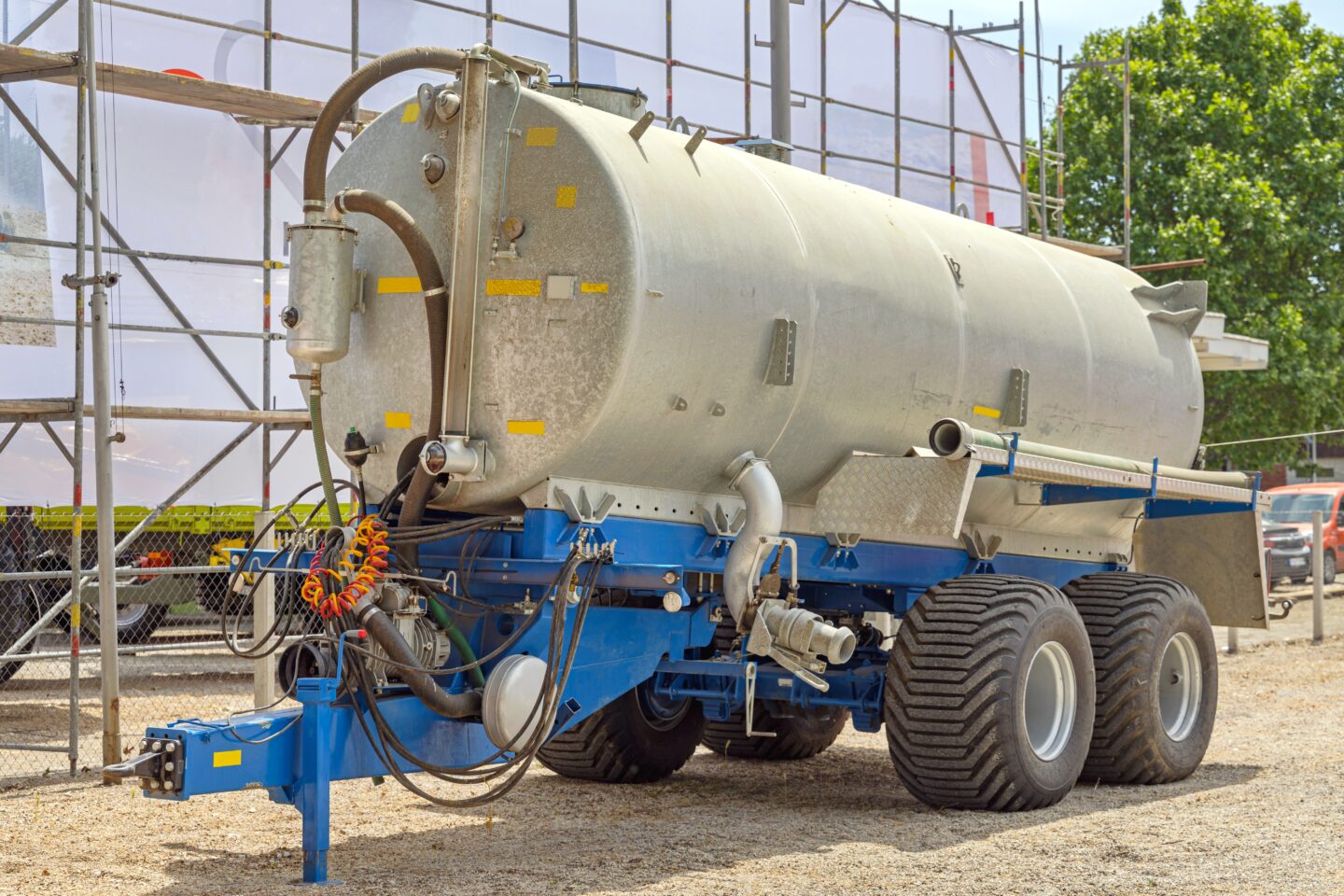
Slurry tanks, pits and chambers can be confined spaces. While the risks of falling or drowning may be obvious, there are other dangers which are much more difficult to see.
Slurry produces gases which can build up in enclosed or poorly ventilated spaces. One of these is hydrogen sulphide, a highly toxic gas which can cause a person to lose consciousness very quickly.
The HSE advises that entry into confined spaces should be avoided wherever possible. Where this is not possible, the risks need to be properly assessed, and a safe system of work put in place. Depending on the circumstances, this may include testing the atmosphere before entry, ensuring there is adequate ventilation, providing appropriate protective equipment and, importantly, having suitable rescue arrangements in place.
The danger of attempted rescues from slurry tanks
One of the reasons confined-space incidents can be so dangerous is the risk of more than one person becoming a casualty.
If someone collapses or becomes trapped, the natural reaction of someone nearby may be to go in and try to help. However, if that person has been overcome by a hazardous atmosphere, anyone entering the same space without the right equipment and precautions can very quickly find themselves in the same danger.
The HSE has previously warned about fatal incidents on farms where a second person has died after entering a confined space to rescue someone else.
This is why rescue arrangements need to be considered before work starts, rather than once something has gone wrong. Simply relying on the emergency services is not an adequate rescue plan.
Agriculture remains one of Britain’s most dangerous industries
Sadly, fatal accidents in agriculture are not uncommon.
The latest provisional HSE figures show that 22 workers were killed in agriculture, forestry and fishing in 2025/26. When deaths involving members of the public are included, 29 people lost their lives.
This is particularly concerning given the relatively small number of people employed in the sector. According to the HSE, the fatal injury rate in agriculture, forestry and fishing is around five times higher than in construction and 21 times higher than the average across all industries.
There is no question that agricultural work can involve significant risks. Those working on farms may routinely work with heavy machinery and vehicles, livestock, work at height and in confined spaces.
That does not, however, mean that serious or fatal accidents should be regarded as an inevitable part of the job. Risks still need to be identified, assessed and, wherever possible, removed or reduced.
Keeping people safe when working in confined spaces
Employers have a legal duty to protect the health and safety of their employees and others who may be affected by their work.
When work involves a confined space, the starting point should always be whether entering it can be avoided. If it cannot, the risks must be properly assessed before the work starts.
Those carrying out the work need to be competent and appropriately trained, and suitable precautions need to be in place. Depending on the nature of the work, this may include atmospheric testing, ventilation and appropriate personal protective equipment.
There also needs to be a plan for what happens if something goes wrong. Suitable rescue equipment should be available where required and those involved need to know what to do in an emergency. This is particularly important where entering the space to try to rescue somebody could put another person’s life at risk.
When a fatal workplace accident happens
The consequences of a fatal workplace accident extend far beyond the person who has died. For those left behind, a sudden death can have devastating emotional and financial consequences.
Where a death has been caused by a failure to properly manage workplace risks, the deceased’s estate and certain family members may be entitled to bring a civil claim.
Every case is different, but a claim following a fatal accident can include compensation for financial dependency, the loss of services the deceased would have provided and other financial losses resulting from the death.
Of course, no amount of compensation can make up for the loss of a loved one. It can, however, provide some financial security for a family dealing with the consequences of an unexpected death.
Investigations into serious and fatal workplace accidents are also important in establishing what happened and whether anything could have been done differently. Lessons learned following one accident can be vital in preventing another family from experiencing the same thing.
The circumstances of the Cheshire accident remain under investigation. Our thoughts are with the family and friends of both men at what must be an incredibly difficult time.