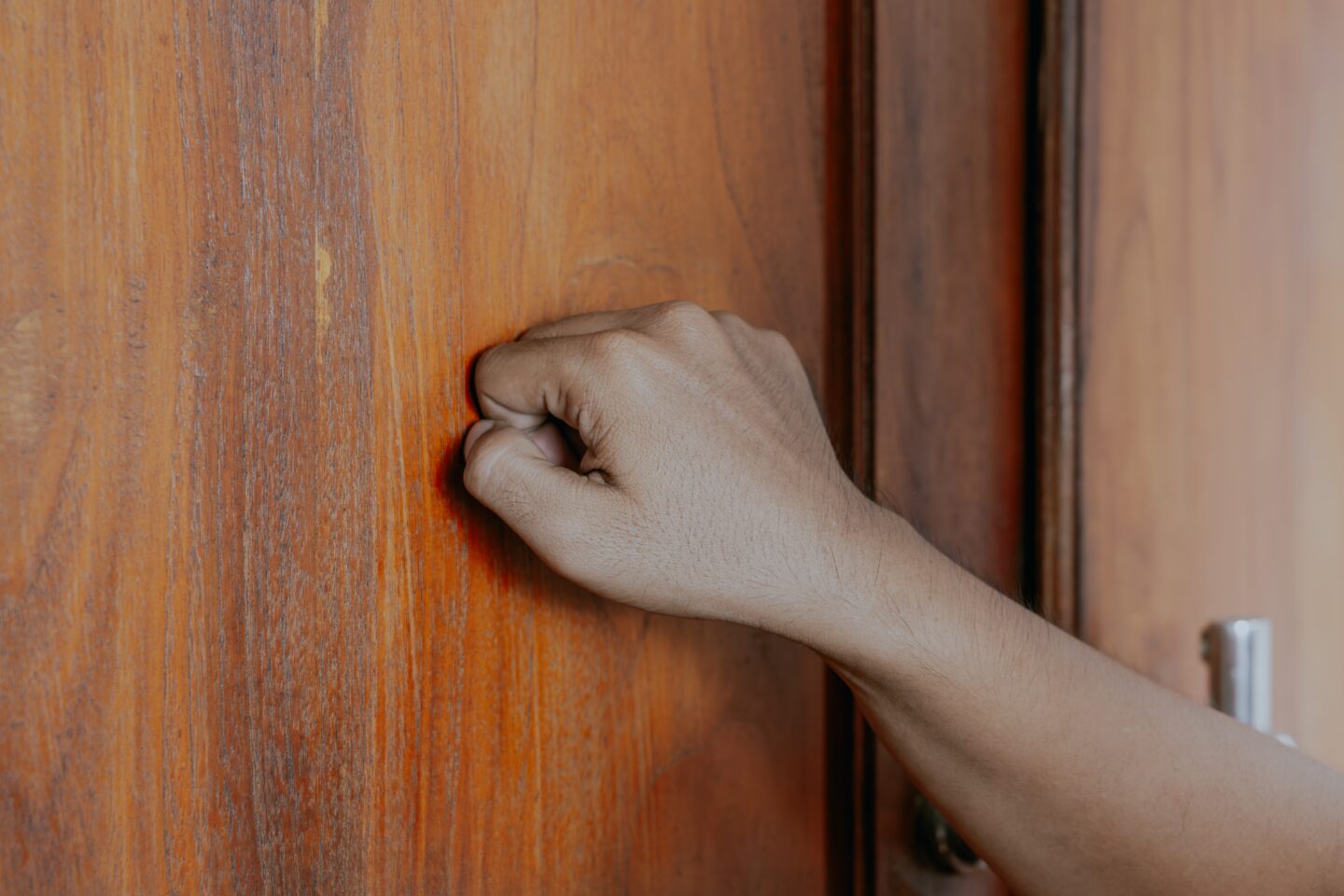
The troubling ‘door knocking’ culture revealed by women in the Armed Forces

‘Door knocking’ sounds like an innocuous phrase. But in ITV News’ Her Fight: Are Women Serving in the Military Safe?, women used it to describe men turning up at the doors of female military accommodation looking for sex.
Men would knock on their doors – sometimes banging – until the women answered.
One, named Sophia, described opening her door to a drunk serviceman who forced himself on her before she managed to get him out of the room. She also described a wider culture in which groping, sexualised behaviour and inappropriate conduct was becoming something women were simply expected to tolerate.
The fact that ‘door knocking’ had become a recognisable term is itself troubling. If behaviour becomes sufficiently familiar that people have a name for it, we should be asking how it became normalised enough to need one.
Imagine what that does to somebody’s sense of safety. Your bedroom should be a place of solitude, where you close the door to work at the end of the day. Instead, a knock can mean wondering who is outside, whether they will leave, whether saying no will be enough – and whether anybody will come if you need help.
Perhaps most disturbingly, women can begin to accept this is simply another part of military life they must learn to manage.
What door knocking tells us about normalisation
When sexual harassment becomes normalised, responsibility can shift from the perpetrator to women, who are expected to change their own behaviour to stay safe or fit in.
Her Fight illustrated how women in the military changed their own behaviour in order to belong.
That might mean laughing at sexual comments they dislike, becoming more sexualised in the way they speak or behave, or participating in a culture they would never otherwise have chosen. It may, in some circumstances, include becoming more sexually active with colleagues.
Sophia described saying and doing things she did not want to do because she felt that was how she had to survive within the culture around her.
Her experience shows how the burden can shift onto women to adapt to unacceptable behaviour, rather than the behaviour itself being challenged.
Going along with something isn’t the same as consent
The law is clear that consent requires a genuine choice. Under section 74 of the Sexual Offences Act 2003, a person consents only where they agree by choice and have both the freedom and capacity to make that choice. The Crown Prosecution Service also makes an important distinction between genuine consent and mere submission, acquiescence or compliance.
That distinction matters enormously in the military context. Someone may stop resisting, but that does not automatically mean they freely choose what is happening.
Military rank, hierarchy, dependence upon colleagues, the pressure to fit in and the fear of being isolated or labelled difficult can all form part of the circumstances in which a person’s freedom to choose must be considered.
Whether an offence has occurred will always depend upon the individual facts and evidence. But if somebody is thinking:
He is going to do this anyway.
Nobody is going to intervene.
I just need to get through it.
Then going along with what happens does not necessarily mean they have freely chosen it.
When sexual harassment becomes ‘part of the job’
The Armed Forces are unusual workplaces. People work, train, socialise and often live together. They may be far from home and heavily reliant upon the people around them. Rank and hierarchy permeate daily life, and fitting into the group can matter enormously. That makes culture particularly powerful.
If a woman starts to believe that unwanted touching, sexual comments, pressure for sex or men appearing at her accommodation door are simply things she must tolerate to have a military career, something has gone badly wrong.
That is not resilience. It is not banter. And it should never be treated as an occupational hazard of serving alongside men.
‘Door knocking’ also raises another uncomfortable question: who heard the knocking?
Sophia described a man banging on her accommodation door and demanding sex, yet nobody came out and nobody intervened.
The responsibility for preventing sexual violence cannot rest with women becoming better at avoiding it.
When the consequences continue
For some survivors, the impact does not end when the incident ends.
Sexual assault, harassment and abuse can cause serious and lasting psychiatric injury. It may affect somebody’s ability to continue serving and, in some cases, contribute to the loss of a military career altogether.
At BBK’s Military Claims Team, we can advise serving personnel and veterans about potential civil claims arising from sexual assault, harassment and abuse during military service, including claims involving psychiatric injury and the financial consequences of a damaged or lost career.
Time limits apply to civil claims, so it is important not to assume you need to wait for a criminal investigation, court martial, Service Complaint or medical discharge to conclude before seeking legal advice.
If something has happened to you during military service and you are unsure whether you may have a claim, speaking to a specialist military solicitor at an early stage can help you understand your options.
One of the most important distinctions Her Fight asks us to confront is also one of the simplest:
Going along with something is not always the same as choosing it.
Submission is not consent.
If Her Fight, or the issues discussed in this blog, resonate with you and you’d like to speak to a solicitor about your experiences in the Armed Forces, please do get in touch: natashamason@bbkllp.co.uk.