Supporting recovery through challenge: BBK partners with Adaptive Grandslam

I am very proud to share that Bolt Burdon Kemp has launched a new partnership with Adaptive Grandslam (AGS).
Supporting the Armed Forces community is deeply important to me. I also know, both personally and through my work, how much a life-changing injury or medical discharge can alter someone’s sense of who they are and what their future looks like.
That is what makes the work of AGS so powerful. Their teams take on some of the biggest physical challenges in the world, but their work is also about helping injured people take their first steps back towards confidence, independence and a sense of purpose.
Big challenges have to start somewhere
AGS was founded and is run by injured veterans, and creates opportunities for the disabled community, including former service personnel, using adaptive expeditions and physical challenges as part of the recovery and rehabilitation process.
The organisation began with the ambition of former Parachute Regiment Captain Martin Hewitt seeking to complete the Explorers Grand Slam. This endeavour involves climbing the highest mountain on every continent and walking unsupported to the North and South Poles. Martin was injured whilst leading his soldiers in combat in Afghanistan. These injuries paralysed his right arm and ended his military career. He subsequently went on to become the first disabled person to complete the Explorers Grand Slam.
AGS teams have taken on environments ranging from the summit of Mount Everest to the frozen expanses of the polar regions. These achievements are genuinely extraordinary. They show that serious injury or disability does not have to mark the end of ambition or adventure.
However, nobody begins on the summit of Everest. Every expedition starts much earlier, with somebody deciding to try. For a person adjusting to a life-changing injury, that decision may simply mean returning to physical activity, joining a team or setting a goal that once felt out of reach. Before the major expedition comes the first training session, the first difficult day and the first moment when someone begins to see what might still be possible.
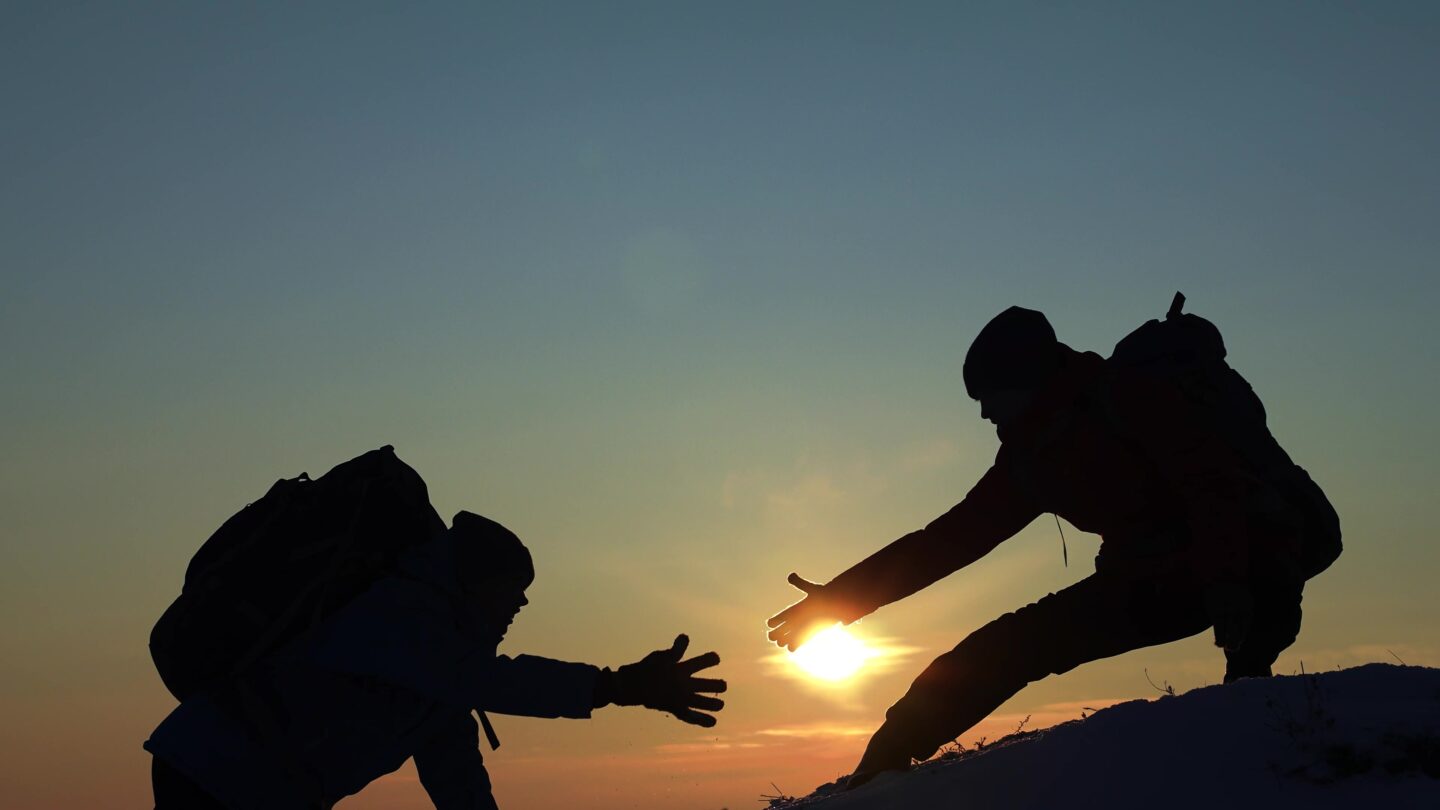
AGS creates opportunities for those first steps as well as the headline achievements which follow them. Those first steps out of a hospital bed are vital, and AGS are there, championing people along the way. It’s not all about climbing mountains, and AGS work hard to train and develop people after injury, so they feel confident enough to take on challenges that are genuinely demanding. The camaraderie along the way from the whole team is what gets people through the difficult terrain and the bad weather, and it’s this spirit which helps overcome the physical limitations from injury that their members face.
Finding a way forward after injury
The medical discharge process is a confusing and scary time, not to mention how unsettling it can be when a military career does not end in the way someone expected.
Service provides far more than employment. It can shape someone’s identity, friendships, routine and sense of purpose. When injury brings that to an abrupt end, the individual may be trying to manage both the effects of the injury and the loss of the future they had planned.
Medical treatment is clearly an important part of rehabilitation, but recovery is not limited to appointments, surgery or physiotherapy. People also need reasons to keep moving forward. They need opportunities to test themselves, reconnect with others and build confidence in what their life can hold next.
This is where a difficult but achievable challenge can be so valuable. Training provides structure. A team provides connection. Progress provides evidence that injury has changed someone’s circumstances without removing their ability to achieve.
Not every beneficiary will aim for Everest or a polar expedition, nor should the value of recovery be measured only in dramatic achievements. Through the AGS Foundation, people living with disabilities can also be supported to take part in sporting and outdoor activities, develop skills and qualifications, pursue meaningful occupations and live more independently.
The scale of the challenge may differ, but the principle is the same: helping someone move from wondering what they can still do to discovering it for themselves, and this is what AGS do so well.
Why this partnership matters to BBK
BBK’s Military Claims team represent serving personnel and veterans who have suffered serious physical and psychological injuries. We see how the consequences can reach into every part of their lives, affecting careers, finances, relationships and plans for the future.
A successful legal claim can help provide treatment, rehabilitation, equipment, care and financial security. Those things matter enormously, but legal support is only one part of rebuilding after injury.
Our clients may also need the confidence to try something new, the support of people who understand what they are going through and a goal which gives them something positive to work towards. AGS provides those opportunities in a way that is practical, challenging and rooted in the experience of injured veterans themselves.
That is why this new partnership is such a natural fit for BBK and why I am so pleased to be able to support the invaluable work AGS does.
The major expeditions will rightly continue to attract attention. They demonstrate what determination, preparation and the right support can make possible.
But the first step matters too. It may be less visible than reaching a summit or crossing a polar landscape, but for the person taking it, it can be every bit as significant.
I am proud that BBK will be supporting AGS as it helps more injured veterans and members of the disabled community take that step and discover where it might lead.