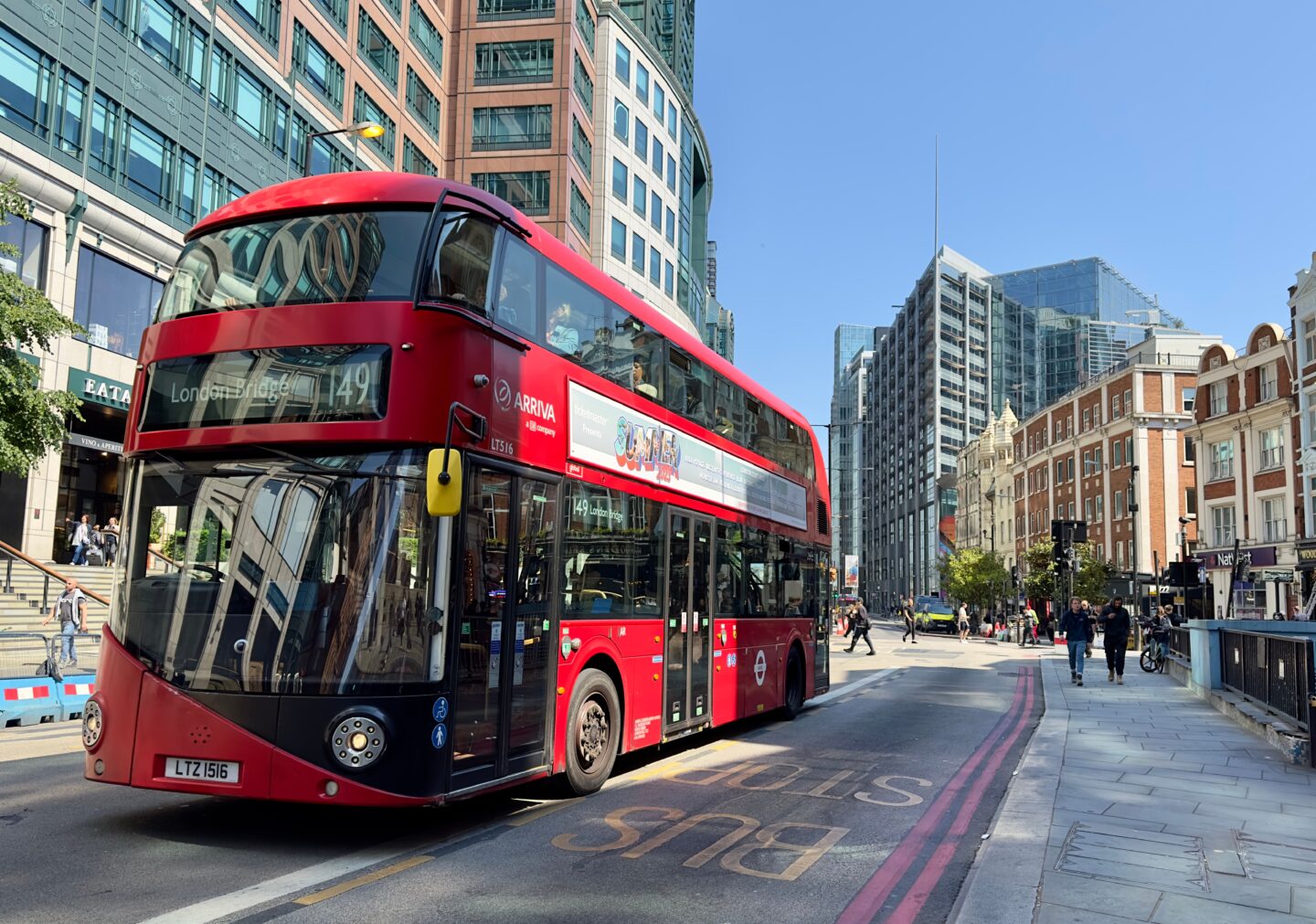
Free bus travel for disabled people is progress, but only if they can get on the bus

The Prime Minister’s announcement that eligible disabled people across England will soon be able to use their concessionary bus passes all day, every day, is welcome news.
From 1 April 2027, disabled bus pass holders will no longer be restricted to travelling for free only between 9.30am and 11pm on weekdays. It is a practical reform that recognises a simple truth: disabled people need to travel for work, education, healthcare and everyday life at the same times as everyone else.
Removing these time restrictions should make a real difference. For many people, the current rules have meant paying for early morning journeys to work, college or hospital appointments, or rearranging their day around an arbitrary cut-off point.
A bus pass should be an enabler, not another barrier, so in that respect, the announcement is a significant step in the right direction.
But free travel is only meaningful if the journey is actually possible.
‘Unreliable and unpredictable’ disabled access to buses
BBK has long campaigned for more accessible public transport. As part of our 2025/26 Manifesto for Injured People, we called for a national inclusive transport strategy and greater investment in accessible transport infrastructure to ensure disabled people can travel with dignity and independence.
Our previous research has also highlighted some of the practical barriers wheelchair users can face when travelling by bus.
As part of our Going the Extra Mile campaign, wheelchair users tested popular commuter journeys across London and described their experiences of using public transport. Several had to rely on buses because parts of the Underground network were inaccessible to them.
Their experiences highlighted problems including broken ramps, drivers failing to deploy them, buses stopping in positions that made ramps difficult to use and wheelchair spaces being unavailable. One participant, who used buses for 80–90% of his journeys in London, described them as “unreliable and unpredictable”, explaining that a journey taking 15 minutes one day could take 45 minutes the next.
Free bus travel only part of the answer
The findings underline why removing restrictions on concessionary fares is only part of the answer. Affordability matters, but accessibility cannot be treated as a separate or secondary issue. Disabled people also need to be confident that when they arrive at a bus stop, they can board the bus, travel safely and reach their destination without accessibility failures adding significant time, stress or uncertainty to their journey.
This is why the announcement should be seen as a starting point rather than the end of the conversation.
The Government has acknowledged that transport policy can either open doors or close them. It must now apply that same urgency to the physical, practical and legal barriers that still prevent too many disabled people from travelling with dignity, confidence and independence.