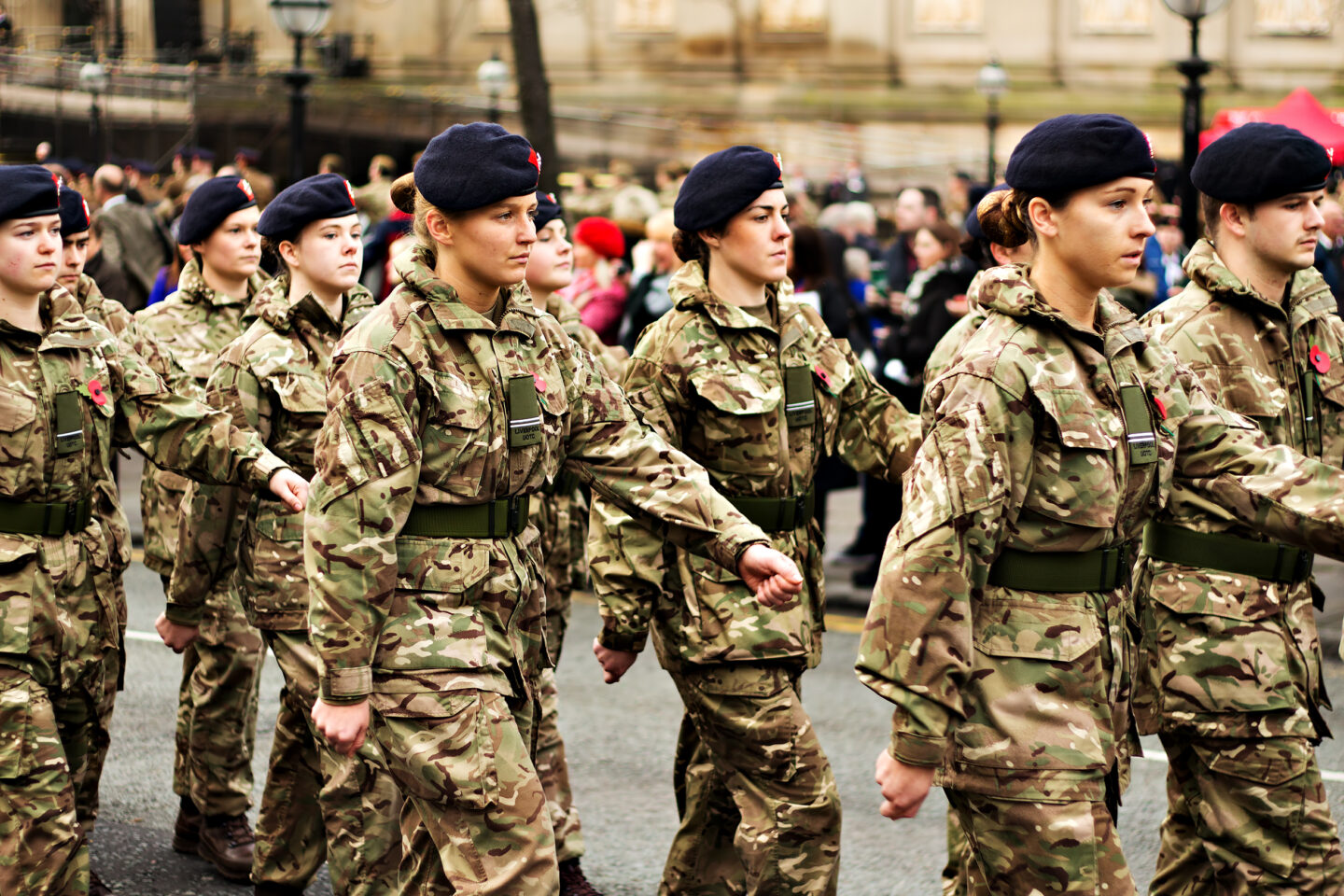
Before they were soldiers: the raped teenage Army recruits who should have been protected

A BBC investigation has uncovered fresh allegations of rape, sexual assault and harassment involving teenage recruits at the Army Foundation College (AFC) in Harrogate, prompting renewed questions about safeguarding within the Armed Forces.
The investigation centres on the experiences of former female recruits who say they were abused by fellow recruits and instructors while aged just 17, and that repeated reports of abuse were not adequately acted upon.
The AFC is the British Army’s only training establishment for young recruits aged 16 to 17 and a half, focusing on military training, personal development and education.
Several women bravely came forward and described their experiences, including how they were subjected to misogynistic behaviour by instructors. The survivors also shared their belief that the Army failed to protect them when they reported the incidents.
Systemic culture of misogyny and sexual violence
Unfortunately, this is not the first time abuse against women in the Armed Forces has made headlines, but what makes this investigation particularly devastating is that the women were only 17 when the assaults happened – they were still legally children.
I’m only six months into working in Bolt Burdon Kemp’s Military Claims team and yet it does not surprise me that between January 2018 and June 2025, there were 32 allegations against permanent staff.
Nor does it surprise me that several instructors at AFC have been convicted in court martial of physical and sexual violence in the past five years.
Worrying behaviour from teenage boys
What struck me the most was that 144 out of the 176 complaints were made against junior soldiers, who were teenage boys – also legally children. The girls describe being sexually assaulted by male soldiers the same age as them. One girl even slept across her door to stop male soldiers coming in when her lock was not working.
This is deeply concerning, why and where have these teenage boys learnt these behaviours? One woman described how misogynistic attitudes and behaviours of the AFC staff rubbed off on some of the male teenagers. Another believes the sexist attitude towards women is encouraged by some male instructors. One even describes how the instructors would mark girls’ looks out of 10, walk into their dorm rooms without knocking and just stand there and stare at the girls in their underwear.
History repeating itself at AFC
This is not the first time the AFC has faced scrutiny for the abuse of underage recruits. It seems to be part of a long-standing pattern of abuse affecting teenage recruits. In 2024, the Child Right’s International Network (CRIN) published a report which documents allegations and confirmed cases spanning roughly a decade.
The issue is not whether the abuse occurred – there were multiple criminal convictions and official findings which demonstrate it had – but the issue is the systemic safeguarding failures. The Ministry of Defence (MOD) contracts Ofsted to inspect the welfare, care and support provided to recruits, yet the CRIN report criticises the external oversight. Ofsted has graded AFC as ‘outstanding’ for welfare continuously since 2012 despite CRIN repeatedly sharing evidence of the abuse with Ofsted.
Armed Forces appeals for survivors to come forward
The Army told the BBC it encourages anyone who has experienced or witnessed unacceptable or criminal behaviour at the AFC to come forward, but what are they going to do to prevent the alleged misogynistic behaviours of instructors filtering down to the teenage recruits? This raises a serious concern about the culture in the AFC.
Labour MP, Emma Lewell, said, “If this was anywhere else, it would have been closed down by now, or someone would have been in there looking in-depth at what is going on”. She is calling for an independent inquiry into the college led by someone with significant safeguarding experience.
Women’s safety across the Armed Forces
This forms part of a wider issue concerning the safety of women in the Armed Forces. An MOD report last year found that two thirds of women serving full time in the UK’s Armed Forces reported experiencing at least one sexualised behaviour in the preceding 12 months.
The issues at the AFC do not exist in isolation. Wiltshire Police is currently carrying out a nationwide investigation relating to medical checks carried out between the 1970s and 2016 after hundreds of women said they were subject to unnecessary intimate medical examinations, alleging sexual abuse.
The British Army’s values include discipline, integrity and respect for others, and these values should create safety. But when someone is sexually assaulted during the recruit process or training, the trust they had in the institution is undermined before their career has even begun.
For many women, joining the Army means they are stepping into a male-dominated environment which can already feel daunting. It must be profoundly disappointing when the institution they chose to serve has failed to protect them during their most vulnerable time.
A common theme is the culture of fear among recruits, and likely most victims of sexual assault in the Armed Forces, to report the assault or harassment. The Atherton report, which reviewed reported cases of rape, sexual exploitation of under 18s, and women being drugged before being assaulted, concluded women were being “denied justice” by a “woefully inadequate” military complaints process.
A call for change
As part of BBK’s Manifesto for Injured People, we call for a revamp in the service complaints process, that the Chain of Command should be removed entirely when there has been a serious complaint, and an independent authority with binding powers should be established.
Although reforms in 2022 removed the Chain of Command from deciding whether complaints can proceed, it still plays a central role in judging their substance. This is especially damaging in cases where an individual’s Chain of Command may be involved in the abuse.
BBK also calls for a change in the way sexual offences are investigated.
The service justice system is not the appropriate forum to investigate and prosecute sexual crimes. We advocate for investigation and prosecution of all sexual offences involving military personnel to be transferred from the service justice system to the civilian police system.
Survivors consistently report a lack of confidence in the process, and conviction rates remain lower than in civilian courts. For example, from January 2023 to April 2024, only 23% of the 93 rape cases heard in the military court resulted in a guilty verdict. This conviction rate is starkly lower than the average 70% conviction rate for rape in civilian courts.
This is also at a time when the MOD refuses to recognise the term ‘military sexual trauma’. The term describes the psychological and physical effects of sexual assault and sexual harassment experienced during military service. Although it would not create a new diagnosis, it may acknowledge the distinct context in which trauma occurs and provide those serving in the Armed Forces with a more specialised framework of support.
This shouldn’t be expected as military ‘culture’ and nor should it be something that women are more likely than not to face at some point in service.
Meaningful change is needed but it will not come from the Army’s statements of zero tolerance, it will come from listening to survivors, continued public scrutiny and transparency.