Adaptive skiing after spinal injury – your options

For ski enthusiasts, getting out on the slopes offers freedom, confidence, and connection with friends and family. Following a spinal injury, returning to the snow may feel out of reach. However, innovations in adaptive skiing technologies mean that, for many, it is still possible.
Now, there are several types of adaptive skiing techniques:
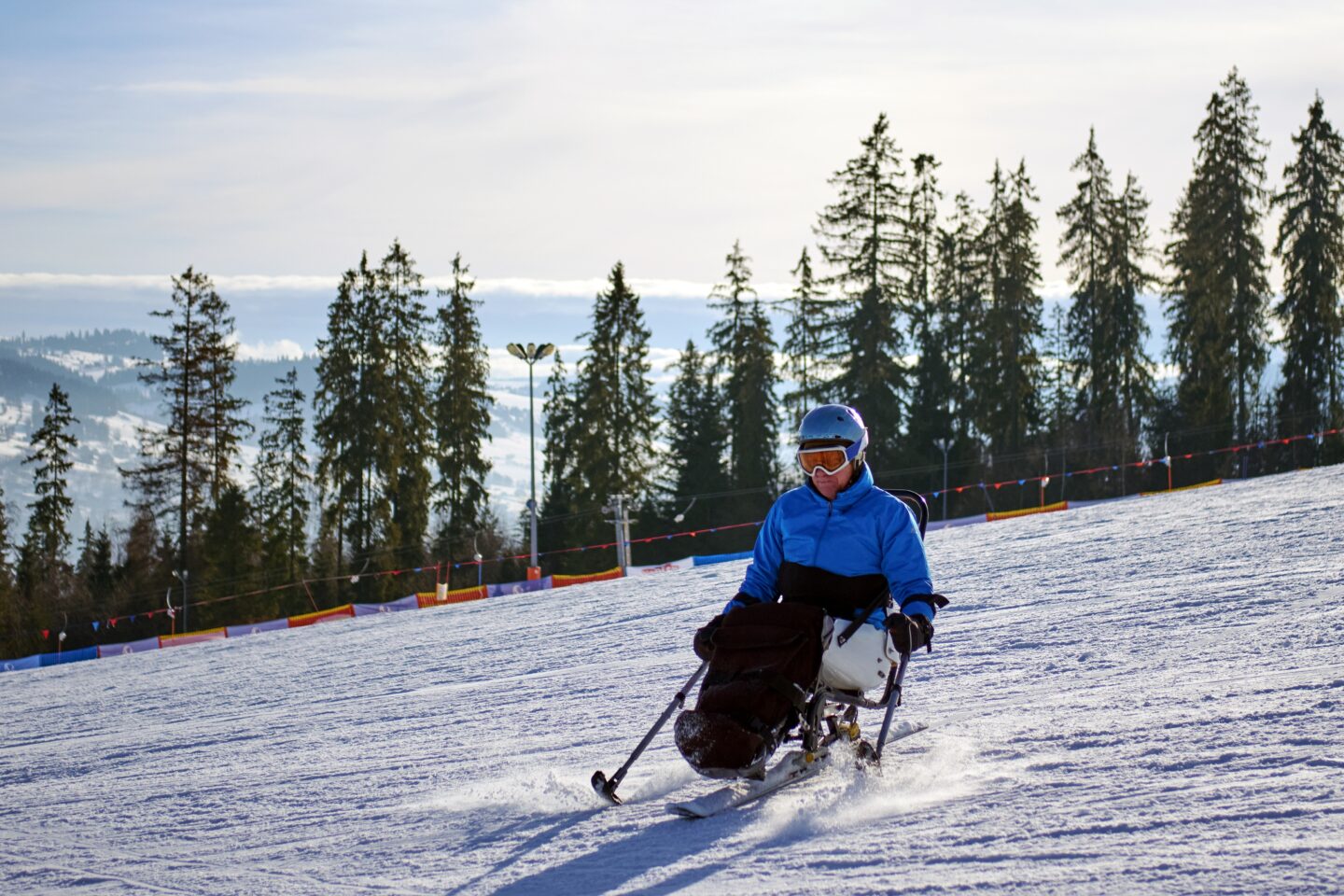
Mono skiing
A mono-ski is a useful piece of equipment for those with spinal injuries, especially paraplegia. The user sits on a single ski and uses crutches with skis attached (outrigger skis) to the bottom for control and turning, and also shifts upper body weight for turning.
Bi skiing
A bi-ski is similar to a mono-ski, however, the seat is mounted onto two skis. Bi-skis therefore provide greater stability. Again, outriggers are used for stability and turning.
Three-track skiing
This technique is commonly used by single-leg amputees or individuals with single-leg disabilities. A single ski and two outriggers are used.
Four-track skiing
Two skis and two outriggers are used, offering stability through four points of support on the snow. This technique is frequently used by those with cerebral palsy, multiple sclerosis, spina bifida, and other disorders which cause mobility, motor, or muscular difficulties.
Adaptive snowboarding
Snowboards can be adapted for those who can stand, through the provision of extra assistance or equipment adjustments where needed to enhance balance and manoeuvrability.
These innovations, alongside lighter materials and improved design, have transformed accessibility in winter sports.
As someone who enjoys skiing and has completed two ski seasons, I know how much fulfilment and enjoyment the sport brings. So I understand how important it is that opportunities exist for people to return to skiing after injury.
While spinal injuries can affect mobility, balance, and coordination, they do not necessarily mean giving up the sport entirely. The success of the athletes at the Winter Paralympics is a compelling illustration of what remains possible.
There are several charities that provide opportunities for those with spinal injuries to ski:
- Back Up Trust offers six-day adaptive skiing courses in Sweden using ski-karts. Back Up Trust service user Nicola attended in 2018 and described her experience on the course saying: “Skiing gave me a freedom and independence that I had not experienced since I had since my accident.”
- Disability Snowsport UK (DSUK) delivers adaptive skiing and snowboarding lessons at indoor snow centres and dry slopes in the UK. DSUK also offers holiday packages in the Alps and North America.
- WheelPower works alongside DSUK to provide adaptive skiing lessons at indoor snow centres.
Through our work at Bolt Burdon Kemp, we regularly see the positive impact these opportunities have on our clients.
Access to sport can play a vital role in recovery, supporting both physical rehabilitation and mental wellbeing. Ultimately, adaptive skiing helps restore independence, rebuild confidence, and enable people to reconnect with the activities they love.