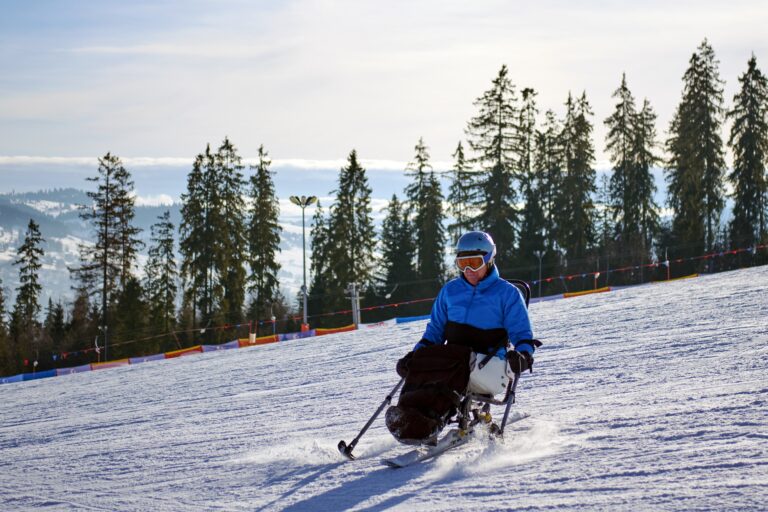
50 years of the Winter Paralympics – redefining life after serious injury

Now that the Milano Cortina 2026 Winter Paralympics has ended, it feels like an appropriate moment to reflect on how Paralympic sport has evolved and what it represents today.
For many people living with a spinal injury, the Winter Paralympic Games are a powerful reminder that life and the sports you love do not have to stop after serious injury.
A brief look back on the history of adaptive skiing and the Winter Paralympics
Adaptive sports began to develop in the years after the Second World War, when many injured servicemen returned home.
A significant pioneer for adaptive skiing was Franz Wendel, an Austrian war amputee. In 1942, he became the first documented person with a disability to compete in a ski race. He used crutches that were attached to small skis, an early form of what later developed into the three-track outrigger method.
For many years, skiing for people with disabilities was mainly limited to individuals with amputations. However, in 1969, Jean Eymore, a former ski instructor who became blind, established a skiing programme in Aspen, Colorado, specifically designed for visually impaired skiers.
Winter Paralympics
Another key figure in the early development of the Paralympics movement was neurosurgeon Ludwig Guttmann, who worked with patients with spinal cord injuries in England. In 1948, at the Stoke Mandeville Spinal Injuries Centre, he organised a sports competition for wheelchair veterans, with archery as the main event. The event took place in the same year as the Summer Olympics and is widely recognised as an important milestone in the emergence of the Paralympic Games.
But while the summer Paralympic Games first launched in 1960, it wasn’t until 1976 that the Winter Paralympics began.
The rise in skiing participation among people with disabilities was evident at the first Winter Paralympics, which took place in 1976 in Örnsköldsvik, Sweden. 198 athletes from 16 countries competed, and there were only two sports: alpine skiing and cross-country skiing.
Over the past five decades, the event has become far more inclusive and has grown into a globally recognised elite competition. Today’s Winter Paralympics showcase not only extraordinary athletic performance, but also the advanced equipment and adaptive technologies that enable athletes to compete at the highest level.
The Milano-Cortina 2026 Winter Paralympics – which marked the 50th anniversary of the Games – brought together 611 athletes from 55 National Paralympic Committees. There are now a total of 79 medal events and six sports, including:
- Para alpine skiing
- Para biathlon
- Para cross-country skiing
- Para ice hockey
- Para snowboard
- Wheelchair curling
A record number of female athletes competed (161), highlighting growing gender equality in Paralympic sports, while the Games were streamed to audiences in 126 countries and received the widest global media coverage to date.
At Bolt Burdon Kemp, we see first-hand – through our clients and the charities we work with – the positive impact that sport and activity can have following life-changing injuries. The continued growth of the Paralympics demonstrates what is possible with the right support, opportunity, and determination.