NHS maternity wards are not fit for purpose, APPG says

At the end of January, I attended Parliament for the first Maternity APPG of 2026 chaired by the formidable Michelle Welsh MP. We heard from incredible and passionate leaders in their fields to discuss how maternity and neonatal infrastructure needs to change to be fit for the future.
Infrastructure deficiencies in maternity and neonatal care
This APPG was focused on problems with NHS infrastructure and it was a passionate roundtable meeting.
We heard some alarming statistics about NHS hospitals and significant problems with lack of space. NHS hospitals are often old buildings, built in a time when there was less equipment needed in each room. These buildings can no longer provide the space needed to meet the needs of maternity and neonatal services. With the increasing number of caesarean sections there is not enough theatre space and in many hospitals there is no capacity for expansion.
Aside from surgery, new technology and other equipment also requires more space which can’t be accommodated in the limited room available.
In short – the hospitals are not fit for purpose today, let alone tomorrow.
Hospital infrastructure causes significant problems for staff and their ability to provide safe care.
Many hospitals do not have spaces to allow staff to have appropriate and necessary breaks. Staff wellbeing is fragile, and goodwill in the NHS among staff is running out.
What’s more, nursing and midwifery are the largest female employers in the UK, with a young and predominantly female workforce, and about 10% of which go on maternity leave at some point. It is very difficult for them to come back, because of the difficult culture in many Trusts as well as other practical issues such as finding somewhere safe and comfortable to express breast milk. The retention rate is very poor and has been for some time.
We also heard how the NHS IT services have significant problems. The capital budget which used to only need to cover physical costs now needs to include digital and IT services.
Many of the data services have major problems. A patient’s notes cannot be easily accessed by different medical providers. Care is delayed and resources wasted. Furthermore, the IT services don’t match up nationally making it very difficult for national audits to take place.
That means trends can’t be seen and data can’t be collected systematically and consistently. A further APPG roundtable to discuss technology solutions will be planned.
Neonatal services
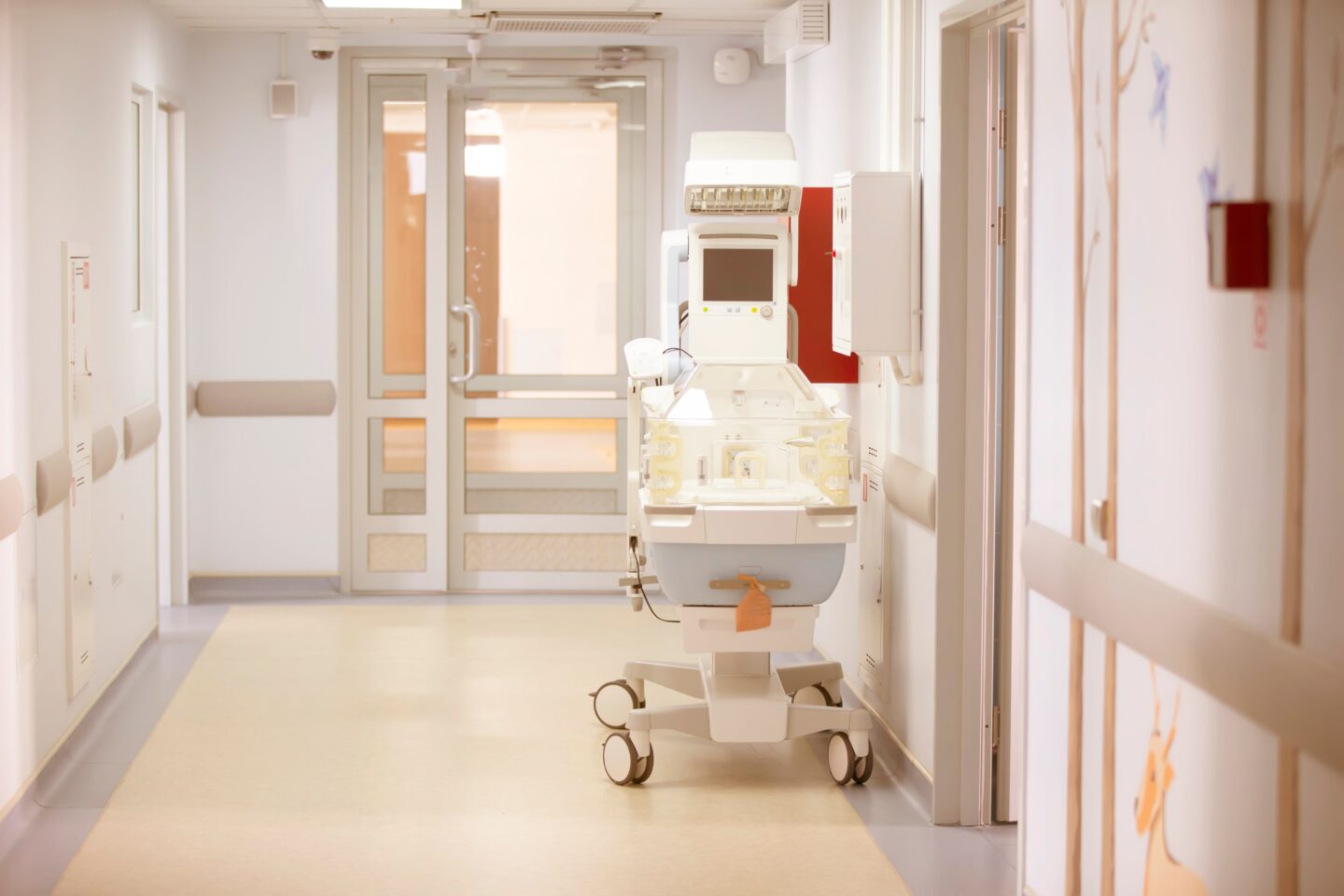
There were also significant issues raised about NHS infrastructure which applied more specifically to neonatal services. Data shows that the smallest and sickest babies do better in bigger, more centralised units. However, this often means families must travel to be closer to their babies. There is inadequate space for families to stay near to these hospitals.
Health building notes give best practice guidance on the design and planning of new healthcare buildings and on the adaptation or extension of existing facilities. During the APPG, the health building notes were discussed and were outdated with the need to be revised.
End of life and bereavement care are fundamental in any hospital, but there is often not the right space for specialist facilities. This is particularly challenging in neonatal care.
Disabled access to maternity and neonatal services
Disabled access remains woefully inadequate across maternal and neonatal services, and we heard the challenges facing disabled women from the very outset of their pregnancy.
Something seemingly straightforward such as taking blood samples can be very difficult because the hospital equipment and infrastructure may not be available or suitable for some women. Hoists are often unavailable and it’s not possible to access some birthing suites using wheelchairs.
Accessibility of waterbirths is beyond reach for many, and few birthing suites have accessible en-suite toilets and showers. There were countless examples of how standard fixtures and fittings caused significant challenges for disabled mothers. One such example was the depth of cots which can make it very difficult for some mothers to pick up their babies.
We also heard the experiences of deaf women with little to no consistent use of British Sign Language. Across the NHS in maternity care, often the first line of accessing medical care is via telephone with few alternatives, which makes accessing medical care extremely difficult for deaf mothers.
The cumulative impact of the shortcomings in the NHS’s infrastructure is most severe for disabled women – impacting every stage of their care.
The other major challenge is the lack of data being collected for disabled women. I was shocked to learn no data is being collected for deaf mothers, making change extremely difficult.
Generally, data collection across the NHS in maternity and neonatal care remains inconsistent and concerns were raised about the accuracy of data being collected.
BBK Manifesto
A lot of important issues were raised, and further upcoming APPGs are planned to tackle problems a step at a time.
At BBK we are dedicated in the fight to improve maternity and neonatal care. Disadvantages for minority groups remain stark, and this APPG highlighted how disabled mothers will face challenges that the NHS is not set up to manage. Change cannot wait.
In our Manifesto for Injured People we call for immediate improvements to fight to end health inequality.
If you or your child has suffered an injury during birth please do not hesitate to reach out to our women’s health team or Child Brain Injury team for a free no-obligation, strictly confidential chat.