The evolution of mobility aids and why it matters for people with spinal injuries today

For many people living with a spinal cord injury, mobility aids are essential for restoring their independence, confidence and quality of life.
At Bolt Burdon Kemp, we see firsthand how life-changing the right technology can be for our clients. From lightweight wheelchairs and standing frames, to powered exoskeletons and smart prosthetics, these sometimes simple innovations allow people to rebuild their lives and achieve goals they might once have thought were out of reach.
But how did these pieces of technology come about?
A brief look back
Mobility aids have been around for much longer than most people realise. The earliest known wheelchairs date back as far as 5 BCE in China, and by the 17th century, people were already experimenting with self-propelled designs.
In 1655, a watchmaker is thought to have built himself a chair that he could move using his own arms, a remarkable invention for its time, and one that some say even influenced the later development of the bicycle.
Prosthetic limbs have an equally fascinating history.
Early versions, often made from wood and leather, were designed to replace lost limbs after injury or illness.
During times of war, the demand for better rehabilitation aids grew rapidly. It was during major conflicts such as the First and Second World Wars and the earlier American Civil War that much of the progress in rehabilitation, equipment, and accessibility for disabilities occurred.
One key figure was Ambroise Paré, a French surgeon who designed and fitted personalised artificial limbs for injured soldiers, a big step from previous generic designs which were not individually tailored.
Another was James Hanger, who lost his leg in the American Civil War and went on to invent the ‘Hanger Limb’ one of the first prosthetics with joints that bent at the knee and ankle, allowing for a much more natural movement. His company, Hanger Prosthetics, still exists and continues to design prosthetics today.
From the past to the present
While those early designs were groundbreaking for their time, modern technology has continued to improve what is possible for people living with spinal injuries today.
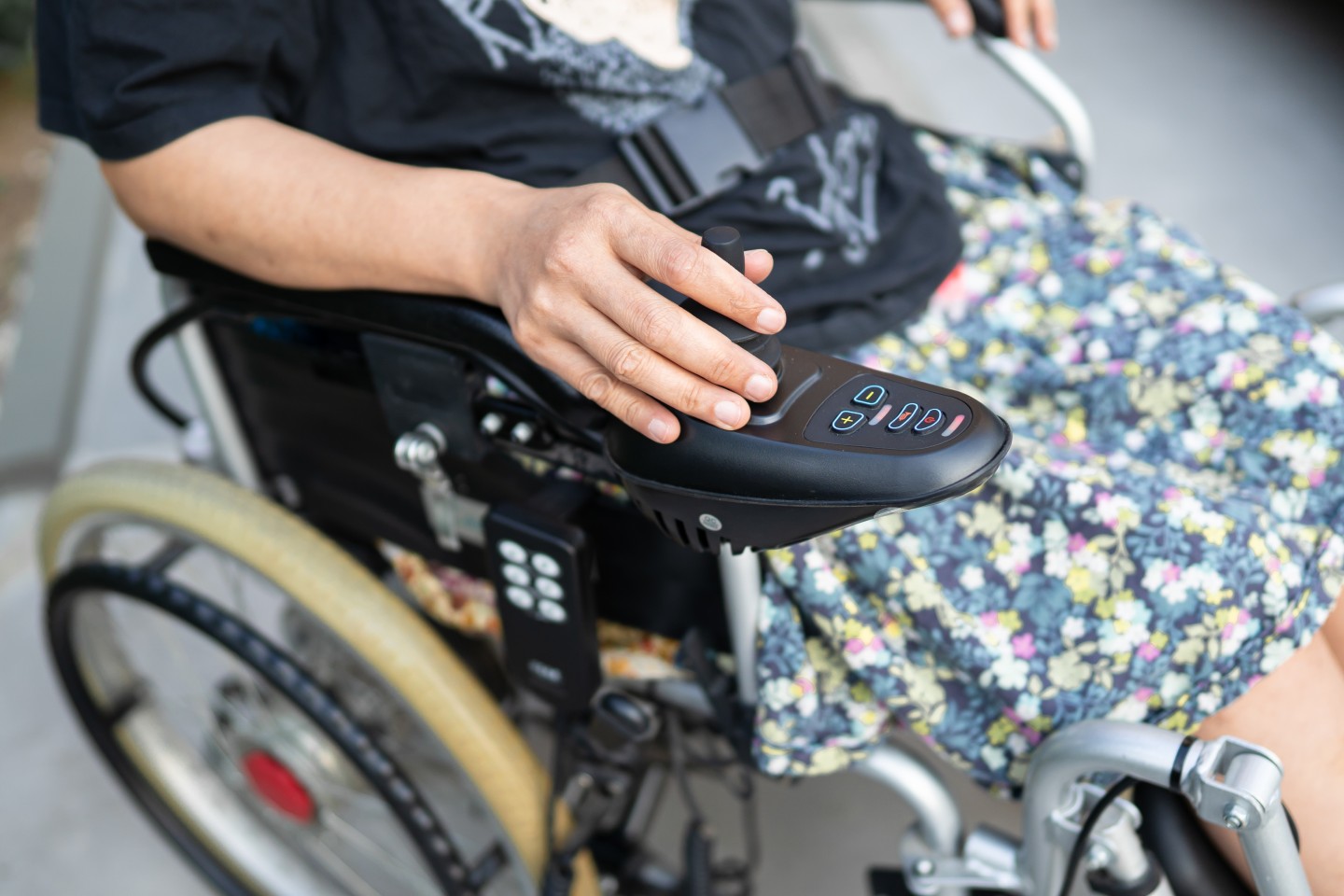
Today’s wheelchairs are lighter, stronger and more comfortable. Power-assisted and electric wheelchairs offer freedom of movement both indoors and outdoors, while robotic exoskeletons allow some to stand and walk again.
These advances are genuinely life-changing, but they don’t come cheap. Specialist mobility equipment can cost tens of thousands of pounds, and unfortunately, access to funding through the NHS or local authorities is often limited.
We know that having access to the right technology, whether that’s a custom wheelchair, a standing frame or smart home adaptations can make a huge difference in rebuilding independence and confidence after injury.
Supporting progress and independence
The history of mobility aids is, at its heart, a story of innovation and determination, qualities we see every day in our clients.
It also reminds us how far we’ve come in recognising the importance of accessibility and inclusion. Unfortunately, this is not yet far enough as many individuals with disabilities continue to struggle to access the correct equipment – cost, availability, location and age can all be factors in determining who can access what.
Robotic rehabilitation can cost double or more compared to conventional therapy. Improving access to newer technologies would help both research and rehabilitation, giving people living with spinal injuries more choice and control.
At BBK, we’re proud to work alongside rehabilitation specialists, charities and assistive technology experts to make sure our clients can access the latest advancements in mobility and independence, and most importantly, give them a choice in their recovery.
Every improvement, however small, represents a step towards greater freedom and opportunity for people living with spinal injuries.
Looking ahead
From ancient wooden wheelchairs to today’s AI-powered exoskeletons, the evolution of mobility aids shows just how powerful human ingenuity can be.
Developments demonstrate massive potential for easier, faster and more adaptable rehabilitation for people with spinal injuries in the future. As technology continues to advance, so too does the potential for people with spinal injuries to live fuller, independent lives.
At Bolt Burdon Kemp, we’re honoured to play a part in that journey, helping our clients to access the ever-evolving equipment they need to thrive.